


15 Emma Oakley Mills way Mashpee, MA 02649
774-238-8093

When to Trim Hydrangeas for Maximum Flowers
Bloomwise Gardening Guide
When to Trim Hydrangeas for Maximum Flowers
Hydrangeas bloom on different types of wood. Trim at the wrong time and you cut off next year’s flowers. Use this timing guide to know exactly when to prune mophead, lacecap, panicle and smooth hydrangeas in your zone.
- Avoid cutting off next season’s flower buds
- Learn which varieties bloom on old vs. new wood
- Follow a simple month‑by‑month pruning calendar
Includes timing cheat sheet for bigleaf, oakleaf, panicle and smooth hydrangeas.
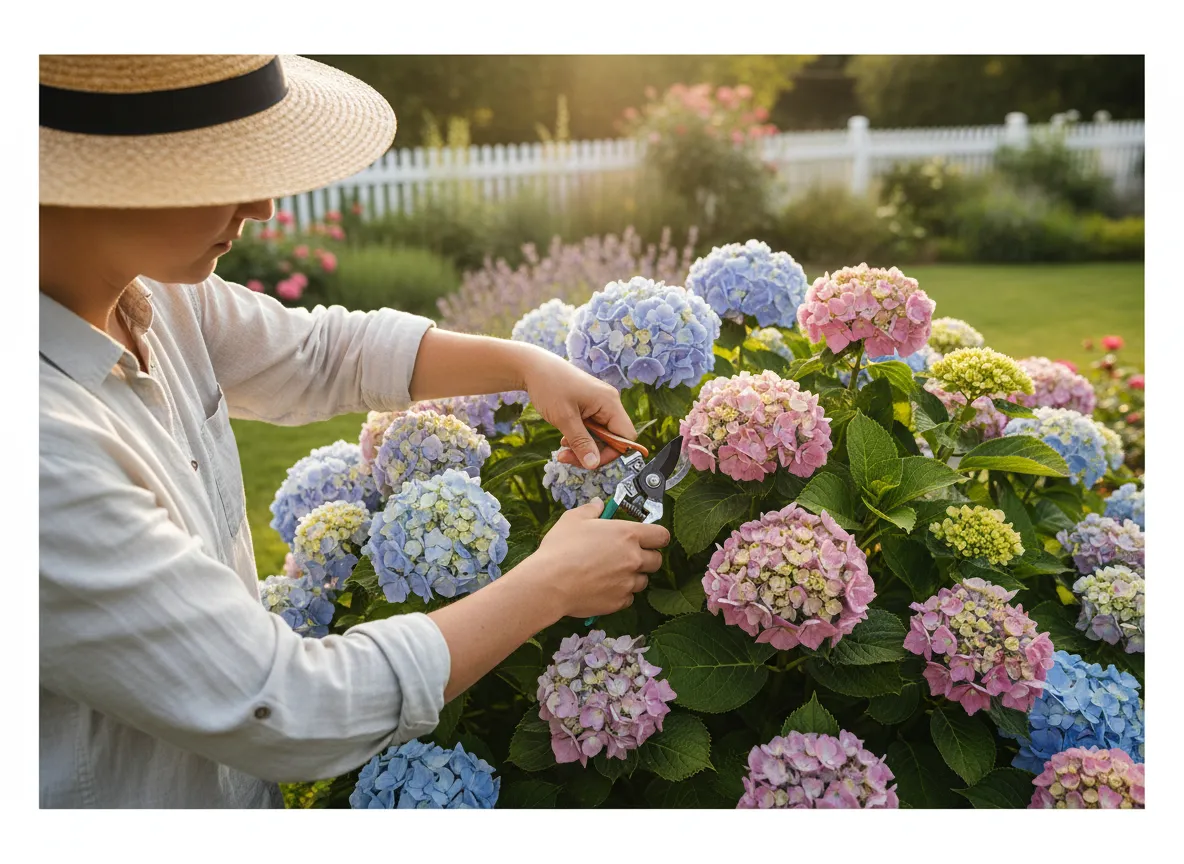
Step 1: Know if your hydrangea blooms on old wood or new wood
Pruning timing is all about where the plant sets its flower buds. Old wood hydrangeas set buds on last year’s stems, usually in late summer. New wood hydrangeas set buds on the current season’s growth, so they can be cut back hard in late winter without sacrificing blooms.
If you’re not sure which type you have, start by matching the flower form:
Old wood bloomers
Common types: Bigleaf (mophead & lacecap, Hydrangea macrophylla), Oakleaf (H. quercifolia).
Key timing rule: Prune right after flowering, no later than 4–6 weeks before your average first frost. Any heavy pruning in fall, winter or early spring risks cutting off the flower buds already formed.
New wood bloomers
Common types: Panicle (H. paniculata), Smooth/Annabelle (H. arborescens).
Key timing rule: Prune in late winter to very early spring while the plant is still dormant. You can cut these back hard each year to manage size and still get strong summer blooms.
Pruning windows by hydrangea type
Use these timing windows as a guide. Always adjust a week or two based on your local climate and the actual bloom time of your shrubs.
Bigleaf (mophead & lacecap)
Bloom: Late spring–summer
Best pruning: Within 1–2 weeks after flowering finishes.
Avoid: Fall, winter, or spring pruning beyond light deadwood removal.
Oakleaf hydrangea
Bloom: Early–mid summer
Best pruning: Right after bloom, only to shape or remove oldest canes.
Avoid: Heavy cutting; oakleafs prefer minimal pruning.
Panicle hydrangea
Bloom: Mid–late summer on new wood
Best pruning: Late winter–early spring before buds break. Remove up to one‑third of height for stronger stems and larger panicles.
Smooth / Annabelle
Bloom: Early–mid summer on new wood
Best pruning: Late winter–early spring. Cut back to 6–18" to control flopping and encourage sturdy new canes.
Zone tip: In colder zones (USDA 4–5), shift all timing 1–2 weeks later for old‑wood types and keep late‑winter pruning for new‑wood types before buds swell.
Avoid the timing mistakes that cost you blooms
- Shearing bigleaf hydrangeas in fall or early spring
- Cutting all stems of oakleaf hydrangeas to the ground
- Skipping yearly renewal pruning on older shrubs
- Ignoring winter damage and leaving dead wood in place
A good rule of thumb: if your hydrangea blooms before July, assume it’s an old‑wood type and avoid heavy spring pruning until you’ve confirmed the variety.
Can I deadhead hydrangeas anytime?
Yes. Snipping off spent blooms (“deadheading”) can be done almost any time without affecting next year’s flowers, as long as you remove only the faded flower head and a short section of stem. Avoid cutting deeply into old‑wood bloomers after late summer.
What if my hydrangea never blooms?
The most common causes are pruning at the wrong time, winter bud damage, or too much shade. If you’ve been cutting bigleaf or oakleaf hydrangeas in fall or early spring, stop and allow stems to grow for a full season. Protect buds in winter with a loose layer of leaves or burlap in cold climates.
Is it ever okay to cut hydrangeas to the ground?
Only for new‑wood types like smooth (Annabelle) and some panicle hydrangeas—and even then, it’s better to leave 6–18" of stem so new growth is sturdier. Old‑wood types should never be cut entirely to the ground if you want reliable blooms.
Do reblooming hydrangeas change the timing?
Reblooming bigleaf varieties flower on both old and new wood. You should still avoid heavy spring pruning; instead, remove only dead wood and do any shaping right after the first main flush of blooms.
"No spam, no pushy sales. We only use your info to follow up about your property."
SMS Consent Disclosure: By providing your phone number, you agree to receive text messages from In and Out Lawn Care regarding your service inquiry. Message and data rates may apply. Message frequency varies. Reply STOP to opt out at any time. View our privacy policy and Terms and Conditions link for more details.